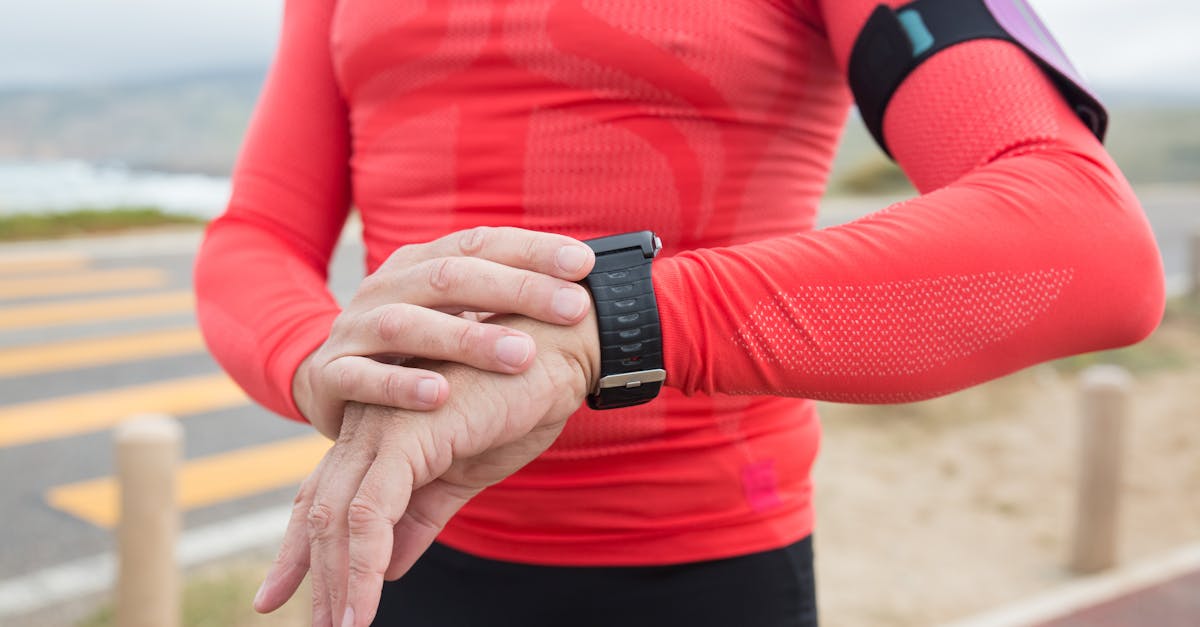
Dual-band GPS is worth it if you run in downtown streets, dense trees, mountain terrain, or race courses where pace and distance errors genuinely bother you. It is usually not worth paying extra for if most of your workouts are on open roads, tracks, treadmills, or flat neighborhood loops.
The confusing part is that terms like dual-band, multi-band, dual-frequency, L1 plus L5, all systems, and SatIQ often get mixed together in marketing copy. They are related, but they do not all mean the same thing. This guide explains the difference in normal runner language, then gives a buying checklist so you can decide whether the upgrade belongs on your wrist.
Quick Verdict
Buy a dual-band GPS watch if:
- Your GPS tracks zigzag near tall buildings, cliffs, bridges, or heavy tree cover.
- Your race pacing depends on reliable real-time pace over long distances.
- You trail run, hike, ski, mountain bike, or do adventure races.
- You are already buying a midrange or premium watch and the battery life still covers your longest activity.
Skip it if:
- You run mostly in open-sky suburban roads or paved paths.
- You mainly care about heart rate, steps, sleep, gym workouts, or smartwatch features.
- Your current watch records repeatable distances on your usual routes.
- You would need to give up battery life, comfort, or budget to get it.
For most runners, dual-band GPS is a nice accuracy upgrade, not the first feature to buy around. Fit, battery life, training tools, app ecosystem, and whether you will actually wear the watch every day still matter more.
What L1 and L5 Mean
GPS satellites broadcast signals on radio frequencies. Consumer watches traditionally used the L1 GPS signal. Newer dual-band watches can also use L5, a newer civil signal designed to improve performance when combined with L1.
In plain English:
| Term | Consumer meaning | Why it matters |
|---|---|---|
| L1 GPS | The long-running baseline GPS signal used by most older watches | Good enough for many open-sky workouts |
| L5 GPS | A newer civil GPS signal broadcast on a different frequency | Helps compatible receivers reduce some errors and improve robustness |
| Dual-band or dual-frequency | The watch can use two frequency bands, usually L1 and L5 | Better chance of a clean track in hard GPS environments |
| Multi-GNSS or all systems | The watch can use multiple satellite constellations, such as GPS, Galileo, GLONASS, BeiDou, or QZSS | More satellites available, but not automatically the same as dual-band |
| Auto-select or SatIQ-style modes | The watch changes satellite mode based on conditions | Saves battery by using high-power GPS modes only when needed |
GPS.gov says GPS modernization is adding L5 to enhance performance, and that future users can combine L5 with L1 for better ionospheric correction and signal redundancy. That does not mean every dual-band watch is perfect. It means the watch has more signal information to work with when buildings, trees, mountains, and reflections make positioning harder.
Why GPS Watches Drift
Your watch is not drawing your route from a perfect overhead camera. It is estimating position from satellite signals, then smoothing that data into a path, distance, pace, and map trace.
The hard situations are predictable:
- Tall buildings: signals bounce before reaching the watch, so your route can appear across the street or through a building.
- Tree cover: leaves and branches weaken signals, especially on winding trails.
- Mountains and cliffs: terrain blocks parts of the sky and creates reflections.
- Bridges and underpasses: the watch may lose or degrade signal briefly.
- Tight switchbacks: tiny horizontal errors can create big distance differences.
- Starting too quickly: the first minutes can be messy if the watch has not locked onto a stable satellite set.
Apple notes that GPS accuracy improves as more satellites become visible and that buildings, mountains, walls, vehicle roofs, and other obstructions can block signal. Garmin similarly tells users that clear-sky GPS accuracy is around a few meters, with real-world conditions affecting results.
Does Dual-Band GPS Make Watches More Accurate?
Usually, yes, in the places where GPS is difficult. Current Garmin owner manuals describe multi-band GNSS as using multiple satellite systems on multiple frequency bands for more consistent track logs, improved positioning, improved multipath errors, and fewer atmospheric errors in challenging environments. COROS describes dual frequency as useful in challenging circumstances like high-rise cities or deep forest. Apple lists precision dual-frequency GPS on its Ultra models and describes it as using L1 and L5 plus positioning algorithms.
But the upgrade is not magic. Dual-band GPS will not:
- Fix a loose watch fit or bad wrist heart-rate readings.
- Make indoor treadmill distance perfect.
- Replace a foot pod for track intervals where lap precision matters.
- Fix elevation gain by itself; for ascent data, a barometric altimeter matters more.
- Make every app show the same distance after post-workout smoothing.
If your current watch is already consistent on your routes, dual-band may make your map look cleaner without changing your training decisions much.
For the vertical side of the same buying decision, see do you need a barometric altimeter in a running watch?.
When Dual-Band Matters Most
| Use case | Is dual-band worth it? | Why |
|---|---|---|
| Downtown running | Yes | Tall buildings create reflections and blocked sky views |
| Forest trails | Usually | Tree cover can make single-band tracks wander |
| Mountain races and hikes | Usually | Terrain can block satellites and distort route shape |
| Road marathons | Sometimes | Helpful in city races, less important on open courses |
| Open suburban roads | Rarely | Single-band GPS is usually accurate enough |
| Track workouts | Not the main fix | A dedicated track mode or foot pod can matter more |
| Soccer, football, basketball, gym sports | Rarely | Wearable GPS is limited or unavailable indoors and less useful for stop-start court sports |
| Youth cross-country | Sometimes | Worth it for serious runners on wooded courses, less necessary for beginners |
For elevation-specific problems, read our GPS watch elevation fix guide. Multi-band helps the route track, but elevation gain depends heavily on barometric sensors, calibration, and app correction.
If you are choosing a new watch and not just fixing one workout, our barometric altimeter buying guide explains when to pay for the sensor.
Battery Tradeoffs
Dual-band GPS uses more power than simpler GPS modes. The exact hit depends on the watch, display, music, LTE, sensor settings, and whether the device uses an automatic satellite mode.
Current Forerunner manuals from Garmin show the pattern clearly: GPS-only modes last longer, while all-systems plus multi-band modes reduce battery life. COROS support similarly says Dual Frequency or Max satellite modes consume more battery than lower satellite settings. Apple Watch Ultra models support dual-frequency GPS, but battery planning still matters for longer races and all-day outdoor events.
Practical rule:
- Use GPS-only or auto-select for normal easy runs in open areas.
- Use all-systems or dual-band for downtown routes, trail races, wooded runs, and important workouts.
- Turn off music streaming, always-on display, and LTE when you need maximum workout battery.
- Charge before long races instead of trusting a half-full watch in the highest GPS mode.
The best implementation is not always dual-band all the time. For many runners, the smartest setting is automatic: save power when the sky is clear, then use the stronger mode when the watch detects a harder environment.
Buying Checklist
Before paying more for dual-band GPS, answer these in order:
- Where do you run most? If your hardest routes include tall buildings, dense trees, mountains, or cliffs, dual-band deserves real weight.
- What problem are you solving? Bad route maps and jumpy pace point toward GPS. Bad elevation points toward barometer and calibration. Bad heart rate points toward sensor fit or a chest strap.
- How long are your longest activities? Check official battery specs for the exact GPS mode you will use, not just the headline smartwatch battery.
- Do you need maps or training metrics more? A watch with single-band GPS but better coaching tools may be better for some road runners than a cheaper dual-band watch with weak software.
- Can the watch use an automatic GPS mode? Auto-select modes are helpful because dual-band is most valuable only part of the time.
- Is the watch comfortable enough to wear overnight? Recovery, HRV, and sleep data only work well if the watch actually stays on your wrist.
Recommended GPS Watches to Compare
These are not lab-test rankings for this article. They are practical starting points based on current manufacturer feature claims, existing site coverage, and the kind of runner who benefits from dual-band GPS. Amazon prices move constantly, so the BuyBoxes hide static prices.
Best Mainstream Running Pick: Garmin Forerunner 265
The Forerunner 265 remains a strong midrange reference point for runners who want multi-band GNSS, Garmin training metrics, and enough battery for most long runs. Newer Forerunner 570 and 970 lines add current-generation upgrades, but the buying logic is the same: choose Garmin if structured training, battery management, and sport-specific tools matter more than smartwatch apps.
 Runner Pick
 Garmin
Garmin Forerunner 265
Multi-band GNSS, strong running metrics, and Garmin's mature training ecosystem for serious runners.
Best Battery Value: COROS PACE 3
COROS is attractive if you want dual-frequency GPS in a lightweight watch with strong battery life and a simpler app experience. COROS lists the PACE 3 with dual-frequency GPS, a barometric altimeter, and long full-GPS battery life, while its support pages note that dual-frequency modes use more battery than lower-power modes.
 Battery Value
 COROS
COROS PACE 3
Lightweight dual-frequency GPS watch with long battery life and simple workout tracking.
Best Smartwatch Hybrid: Apple Watch Ultra
Apple Watch Ultra models are the best fit when you want dual-frequency GPS plus cellular, music, payments, safety features, apps, and everyday smartwatch tools. Apple lists L1 and L5 precision dual-frequency GPS on Ultra technical specs. The tradeoff is battery rhythm: even the Ultra family needs more frequent charging than most dedicated running watches.
 Smartwatch Pick
 Apple
Apple Watch Ultra
The smartwatch-first option for runners who want dual-frequency GPS, cellular, safety tools, and apps.
For deeper product comparisons, start with our best GPS watches for runners, Garmin vs Apple Watch for runners, and running watch vs smartwatch guide.
What About Budget GPS Watches?
Budget GPS watches can still be accurate enough. If you run mostly in open areas, a single-band watch can record distance and pace reliably enough for daily training. That is why a cheaper GPS watch may be a better first buy for new runners, high school athletes, and families watching the budget.
The tradeoff is less margin for bad signal conditions. If a watch lacks dual-band, a barometric altimeter, maps, and robust correction tools, it may still be fine for a 30-minute road run but less satisfying on wooded trails or downtown races.
For lower-cost options, use our best GPS running watch under $200 guide and fitness trackers vs GPS watches comparison before stretching for premium hardware.
Settings That Improve Accuracy Without Buying a New Watch
Try these before upgrading:
- Start outdoors with a clear sky. Give the watch time to lock before pressing Start.
- Use the right activity profile. Run, trail run, track run, hike, bike, and open-water modes may use different algorithms.
- Choose the best satellite mode for the route. Use higher-accuracy modes only when the environment justifies the battery cost.
- Keep firmware updated. Manufacturers improve GPS behavior through software updates.
- Wear the watch snugly and unobstructed. Sleeves, metal objects, and poor antenna orientation can make marginal signals worse.
- Use track mode on tracks. Do not expect raw GPS to trace perfect lane curves.
- Compare repeatability, not one weird file. One bad activity can happen. Repeated errors on the same routes matter more.
Bottom Line
Dual-band GPS is worth it when your environment makes GPS hard. It gives the watch more signal information, which can produce cleaner tracks and steadier pace in cities, forests, mountains, and race settings. It is less important for open-road runners whose current watch already records consistent distances.
If you are choosing between two otherwise similar watches, pick the one with dual-band or a smart automatic satellite mode. If the dual-band model costs much more, has worse battery life for your use, or lacks the training features you actually need, skip it and spend the money on comfort, battery, coaching tools, or a chest strap.
FAQ
Is dual-band GPS the same as multi-GNSS?
No. Multi-GNSS means the watch can use multiple satellite systems, such as GPS, Galileo, GLONASS, BeiDou, or QZSS. Dual-band means the watch can use multiple frequency bands, commonly L1 and L5. A watch can have multi-GNSS without true dual-band.
Is L5 always better than L1?
Not by itself. The benefit comes from a compatible receiver using L1 and L5 together with good positioning algorithms. L5 gives the watch another signal path to work with, especially when conditions are difficult.
Should I leave dual-band GPS on all the time?
Usually no. If your watch has an automatic mode, use it for daily training. Turn on the highest-accuracy mode for downtown routes, wooded trails, mountain days, races, and workouts where GPS quality matters more than battery life.
Does dual-band GPS improve instant pace?
It can help when poor GPS is the reason instant pace is jumpy. But instant pace is still noisy on many watches because it reacts to small position changes. For workouts, lap pace, average pace, or a foot pod can be more useful than staring at second-by-second pace.
Does dual-band GPS fix elevation gain?
Not directly. It can improve the horizontal route track, which may help some mapping corrections, but ascent and altitude are usually better handled by a barometric altimeter plus calibration. See our GPS watch elevation guide for that problem.
Do kids and teen runners need dual-band GPS?
Most do not. Young runners benefit more from comfort, simple controls, good battery life, and age-appropriate training feedback. Dual-band becomes useful for serious cross-country or trail athletes who often run under trees or race on GPS-challenging courses. Our youth cross-country GPS watch guide covers that niche.
Is Apple Watch GPS accurate enough for running?
Yes for most runners, especially Ultra models with precision dual-frequency GPS. Dedicated running watches still tend to win on multi-day battery life, buttons, training analysis, and race-focused controls. The better choice depends on whether you want a smartwatch that runs well or a running watch that has some smartwatch features.
Sources
- GPS.gov: New Civil Signals
- GPS.gov: GPS Accuracy
- Garmin Support: Top FAQs About GPS Distance, Speed, and Pace Accuracy
- Garmin Forerunner 970 Owners Manual: Satellite Settings
- Garmin Forerunner 970 Owners Manual: Battery Life Information
- Garmin Forerunner 570 Owners Manual: Battery Life Information
- COROS PACE 3 product page
- COROS Support: Choosing the Right GPS Mode
- COROS Support: Battery Specifications
- Apple Watch Ultra 3 Technical Specifications
- Apple Support: About privacy and Location Services
Related Articles
How we evaluate: We combine manufacturer documentation, independent user feedback, and parent-focused criteria like safety, durability, ease of use, and long-term value.
Accuracy note: Pricing and product availability can change. Verify details on the retailer site before purchase.
Affiliate Disclosure: Sports Gadget Review is a participant in the Amazon Services LLC Associates Program. When you purchase through links on this page, we may earn a commission at no extra cost to you. Editorial recommendations are made independently.