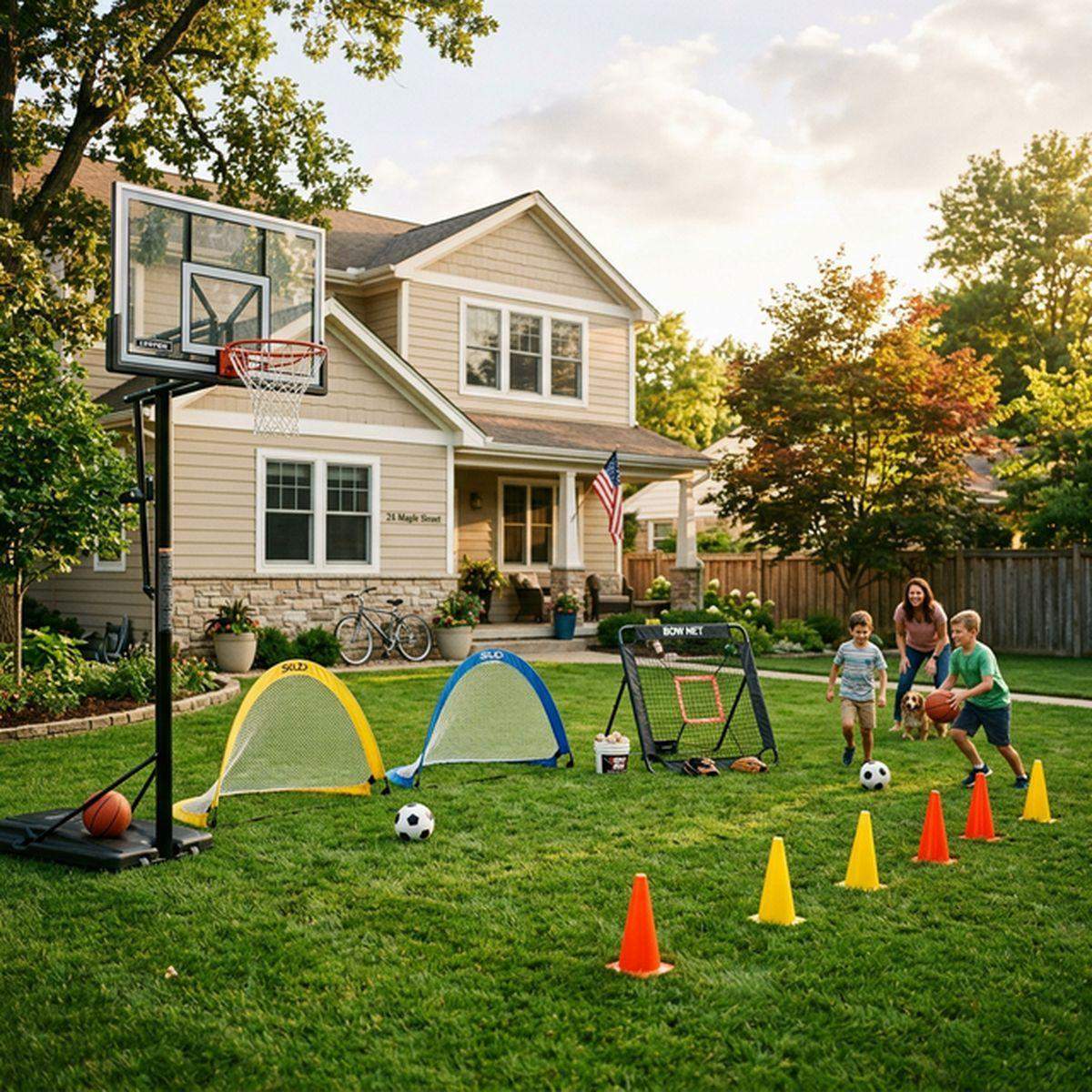
The best backyard sports equipment turns a yard into a repeatable practice space without making every afternoon depend on a gym, field, or team facility. For most families, the right setup is not one expensive item. It is a small mix of durable equipment that fits the yard, matches the child’s age, and can survive weather, missed shots, and everyday use.
Start with a versatile rebounder or net, add one sport-specific anchor item such as a basketball hoop or soccer goal, then round out the space with low-cost family games. That mix covers skill work and casual play, which is what keeps kids using the equipment after the first week.
Quick Picks
| Need | Best fit | Why it works |
|---|---|---|
| Best first backyard training tool | Franklin Sports multi-sport rebounder | One net supports throwing, fielding, passing, and reaction drills |
| Best long-term backyard investment | Lifetime portable basketball hoop | Adjustable height gives kids multiple years of use |
| Best baseball and softball net | PowerNet 7x7 practice net | Catches balls for tee work, soft toss, and pitching drills |
| Best soccer setup | Anchored backyard soccer goal | Real target for shooting and small-sided play |
| Best family play add-on | Cornhole, ladder toss, or spike-style roundnet | Easy games for mixed ages and non-team-sport days |
How to Choose Backyard Sports Equipment
Backyard sports equipment includes training tools, goals, nets, hoops, and family lawn games that can be used at home. The buying mistake is treating all of those as one category.
Training gear should improve a repeatable skill. A rebounder, baseball net, or adjustable hoop earns its space because a child can use it alone or with one parent.
Family games should increase casual outdoor time. Cornhole, ladder toss, badminton, and roundnet do not replace sports practice, but they help make the backyard a place kids want to be.
Safety gear protects the space. Anchors, weighted bases, boundary nets, and proper storage matter as much as the product itself. The U.S. Consumer Product Safety Commission’s movable soccer goal guidance is clear that movable goals should be anchored or counterweighted.
Rebounders and Pitch-Backs
A rebounder is the most versatile first purchase for many families. One adjustable net can support soccer passing, baseball ground balls, lacrosse passing, football throws, and general reaction work.
Best Overall: Franklin Sports Multi-Sport Rebounder
The Franklin multi-sport rebounder is the best starting point because it works across several sports and does not require a large yard. A flatter angle can return ground balls and passes. A steeper angle can return fly balls, pop-ups, and higher reaction drills.
This is the right kind of tool for a child who plays more than one sport or has not settled into one sport yet. It is also easier to store than a full batting cage or permanent goal.
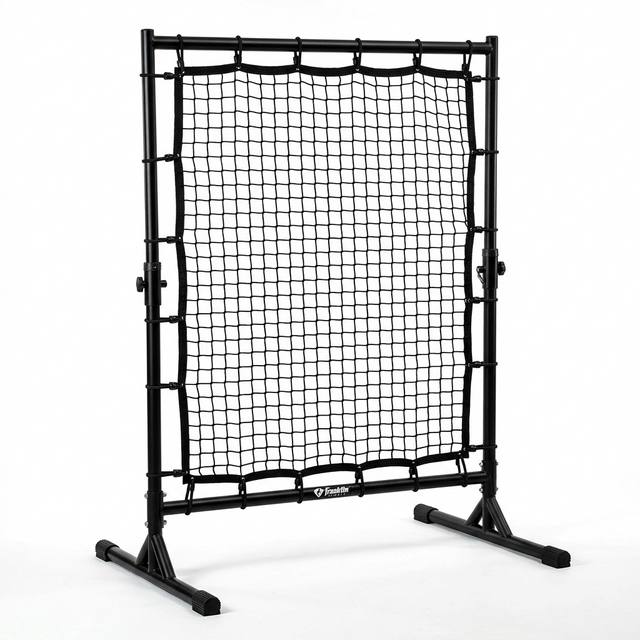 Best Overall
 Franklin Sports
Franklin Sports Multi-Sport Rebounder
Versatile first backyard training tool for throwing, passing, and reaction drills
Budget Alternative: Simple Single-Angle Rebounder
A single-angle rebounder is enough for casual practice. It will not give the same drill variety as an adjustable frame, but it can still help with passing, throwing accuracy, and reaction work.
Choose this route if your child is young, the yard is small, or you are not sure the equipment will get regular use.
Premium Alternative: Larger Quick-Setup Rebounder
Older athletes who hit or throw harder benefit from a larger target and a heavier frame. Larger rebounders are better for dedicated baseball, lacrosse, or soccer practice, but they take more space and are less convenient to move.
Basketball Hoops
An adjustable basketball hoop is the biggest backyard investment for many sports families. The key is height range, base stability, and backboard material.
Look for height adjustment from about 7.5 to 10 feet. That range lets younger kids learn form at a realistic height while still giving older kids and adults a regulation option.
Backboard material matters. HDPE boards are durable but have a softer rebound. Polycarbonate boards are common on portable youth hoops and are more responsive while staying impact-resistant. Acrylic and tempered glass feel closer to gym play but usually cost more and make the system heavier.
For most family driveways, the practical board-size decision is 50 vs 54 inch basketball backboard: 50 inches for tighter spaces and younger kids, 54 inches for teens, adults, and longer-term practice.
Best Family Pick: Lifetime Portable Adjustable Hoop
The Lifetime portable adjustable hoop is the practical pick for most yards because it balances durability, height range, and setup cost. A portable base also lets you move the system if the driveway layout changes.
Fill and anchor the base exactly as the manual requires. Sand is usually more stable than water, especially in windy areas, but it is harder to remove later.
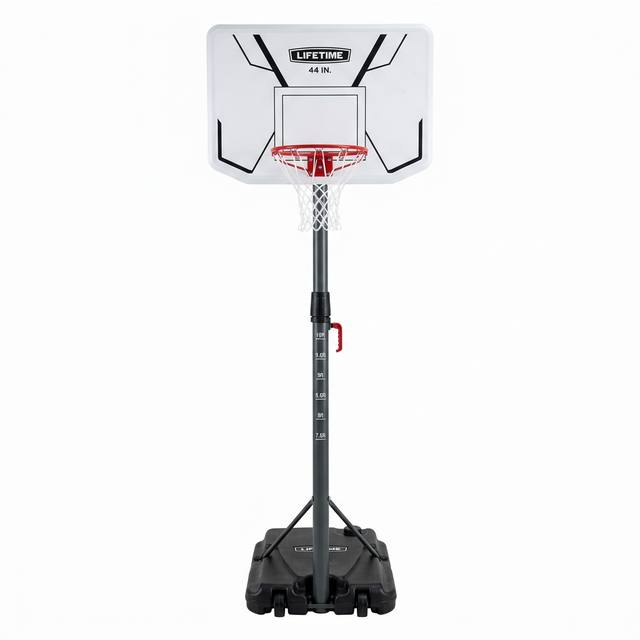 Best Hoop
 Lifetime
Lifetime Portable Adjustable Basketball Hoop
Adjustable height for younger players through regulation practice
Court Surface
Dribbling on grass is not realistic. If the hoop sits over grass, use a flat mat or choose a driveway placement where the ball can bounce consistently. A small concrete pad is better, but it only makes sense if the hoop will be used for years.
Soccer Goals
Pop-up soccer goals are good for young kids and casual play. Semi-permanent goals are better for serious shooting practice.
Pop-Up Goals
Pop-up goals fold flat, store easily, and work well for ages 4 to 10. They are best for small-sided games, backyard scrimmages, and young players who need a visible target.
Do not expect them to handle full-power shots from older players. They are convenience gear, not serious training gear.
Semi-Permanent Goals
Steel or PVC goals in 6x4 or 8x6 sizes provide a more realistic target. Use ground anchors, check the frame after storms, and teach kids not to climb on the net or crossbar.
For a deeper soccer-specific buying guide, use our backyard soccer goal guide.
Multi-Sport Nets and Batting Cages
Nets are useful when the main problem is containment. They keep balls away from windows, fences, neighbors, and parked cars.
Best Small-Yard Net: PowerNet 7x7
The PowerNet baseball net is a strong catch net for baseball tee work, soft toss, and pitching practice. It can also work as a backstop for some lacrosse or throwing drills.
It is not a rebounder. A sock-style net catches and collects balls instead of returning them. It also should not be treated as a dedicated golf driving net unless the manufacturer specifies that use or you add golf-rated impact netting.
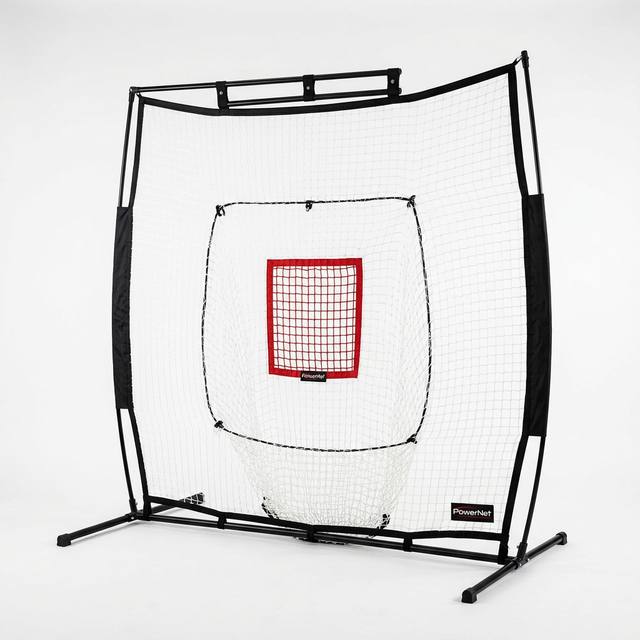 Best Practice Net
 PowerNet
PowerNet 7x7 Baseball and Softball Practice Net
Reliable catch net for baseball, softball, tee work, and pitching practice
Best Large-Yard Upgrade: Batting Cage
If you have the space and budget, a full batting cage can turn a backyard into a serious baseball or softball practice area. Most families do not need one, but baseball families who already pay for cage time can justify the upgrade.
For dimensions, frame types, and netting choices, read our guide to the best home batting cages.
Recreational and Family Lawn Games
Not every backyard purchase needs to be a training tool. Family games help younger siblings, parents, and non-team-sport kids use the yard too.
Good low-barrier options include cornhole, ladder toss, badminton, bocce, and roundnet. These games are useful because they work with mixed ages and do not require a formal practice plan.
If the goal is more outdoor time, a family game may deliver more value than another training gadget.
Weather and Storage
| Equipment | Leave Outside? | Maintenance |
|---|---|---|
| Steel rebounders | Usually | Check bolts and net tension regularly |
| Portable hoops | Yes | Keep base filled and inspect after storms |
| Pop-up goals | No | Fold and store after use |
| Semi-permanent goals | Yes, if anchored | Re-check stakes and frame hardware |
| Practice nets | Sometimes | Store frames before severe wind or snow |
| Batting cages | Seasonal | Remove or secure netting in winter climates |
UV exposure, wind, and moisture shorten net life. If a net starts fraying, replace it before hard shots start slipping through.
Age-by-Age Buying Plan
| Age | Best starting setup | Priority |
|---|---|---|
| 4-6 | Pop-up goals, foam balls, simple lawn games | Safe play and coordination |
| 7-9 | Rebounder plus adjustable hoop | Repeatable solo practice |
| 10-12 | Rebounder, hoop, practice net, anchored goal | Sport-specific skill work |
| 13+ | Larger net, batting cage, specialty training gear | Higher-speed practice and containment |
Start small. The worst backyard investment is a large piece of equipment for a sport your child stops playing after one season.
Yard Size Guide
| Yard size | What fits |
|---|---|
| Small patio or under 20x20 ft | Pop-up goals, reaction ball, simple lawn games |
| Medium yard around 20x40 ft | Rebounder, portable hoop, 6x4 goal |
| Large yard 40x60 ft or more | Hoop, goal, PowerNet, hurdles, larger training stations |
Position rebounders and nets so misses stay in your yard. That reduces broken windows, fence damage, and neighbor complaints.
Final Recommendation
If you only buy one thing, start with a rebounder. It is the most flexible piece of backyard sports equipment because it supports multiple sports and keeps kids practicing without needing a full team.
If basketball is the main sport, make the adjustable hoop the priority. If baseball or softball is the main sport, start with a PowerNet-style catch net. If your goal is family outdoor time, add simple lawn games before buying another training aid.
For related guides, see our soccer training equipment, basketball training equipment, and youth sports tech budget.
Related Articles
- Basketball Shooting Drills Equipment for Youth
- Best Adjustable Basketball Hoops for Driveways
- Soccer Goals for Backyard Training
Sources
Prices and availability change. The BuyBox buttons use affiliate links and should be checked on Amazon for the current product, price, shipping terms, and availability before purchase.
How we evaluate: We combine hands-on use (when available), manufacturer documentation, independent user feedback, and parent-focused criteria like safety, durability, ease of use, and long-term value.
Accuracy note: Pricing and product availability can change. Verify details on the retailer site before purchase.
Affiliate Disclosure: Sports Gadget Review is a participant in the Amazon Services LLC Associates Program. When you purchase through links on this page, we may earn a commission at no extra cost to you. Editorial recommendations are made independently.