Quick Answer: Best Baseball Training Equipment for Youth
Baseball training equipment is the gear that turns a backyard, garage, or basement into a productive practice station — hitting nets, batting tees, pitching machines, swing analyzers, fielding trainers, and the balls and targets that make solo reps possible. This guide focuses on youth and family setups: the equipment that creates safe, repeatable swings, throws, and fielding reps at home without a live pitcher or a full batting cage.
The short version: the best baseball training equipment to buy first is a 7x7 practice net paired with a real batting tee. That two-piece setup produces the highest volume of quality reps per dollar, works across ages 6 through teen, and adapts to tee work, soft toss, front toss, and pitching-target drills. Everything else on this page is an upgrade you add once the basics are in place.
If you are building a home practice setup from scratch, buy in this order:
- Practice net (7x7) — the single most useful piece of baseball training equipment you can own.
- Batting tee — the foundation of contact-point and barrel-path work.
- Ball bucket or limited-flight balls — so you can run reps without chasing regulation baseballs into the neighbor’s yard.
- Reaction ball or fielding trainer — cheap reflex work for infielders.
- Pitching machine or swing analyzer — only after swing and throwing mechanics are stable.
This page is a training-gear filter. We are not ranking uniforms, gloves, cleats, bags, or general apparel — those are accessories, not equipment that creates reps. If you want broad baseball equipment reviews, use the comparison tables below to match a piece of gear to the specific skill you are trying to develop.
Quick Picks
| Need | Best fit | Why it works |
|---|---|---|
| Best first buy | 7x7 practice net (PowerNet) | Enables tee work, soft toss, pitching targets, and safe backyard reps |
| Best hitting fundamental | Quality batting tee (Tanner Tee) | Builds contact point, barrel path, and strike-zone awareness |
| Best moving-ball trainer | Youth pitching machine (SKLZ Lightning Bolt) | Adds timing without needing live pitching every session |
| Best smart upgrade | Swing analyzer (Blast Motion) | Gives older players bat-speed and attack-angle feedback |
| Best budget add-on | Reaction ball | Cheap, portable reflex and fielding work for infielders |
How to Choose Baseball Training Equipment
Before you buy, decide which problem you are solving. The right baseball training equipment depends on the player’s age, your available space, and whether a parent will be feeding balls. Use these five criteria to filter every product on this page.
- Skill you want to develop. Hitting reps need a net and tee. Moving-ball timing needs a pitching machine. Fielding needs a reaction ball or rebounder. Throwing velocity needs a net with a strike-zone target (and later, a radar gun). Buy the tool that creates the reps you are actually missing.
- Age and skill level. Younger players (ages 6–10) benefit most from lightweight balls, simple machines, and forgiving tees. Players 11 and up can start using bat sensors and velocity targets once their mechanics are coach-approved. Match the equipment’s intensity to the player, not the other way around.
- Available space. A 7x7 net needs roughly 8–10 feet of clearance behind it for the sock net to capture hard hits safely. Indoors and in garages, switch to limited-flight or foam balls — regulation baseballs rebound hard off nets, walls, and garage doors.
- Solo vs. parent-fed. The best home equipment lets a kid practice alone. Nets, tees, and single-feed machines score high here. Multi-pitch machines that require constant adult feeding score lower for daily use, even if the reps are higher quality.
- Reps per dollar and durability. A $50 tee that lasts five seasons beats a $200 gadget that sits in a closet. Prioritize equipment with steel or fiberglass frames, replaceable netting, and a track record of holding up to daily youth use.
Best Baseball Equipment by Training Goal
| Training goal | First equipment to buy | Upgrade later |
|---|---|---|
| More hitting reps | 7x7 practice net and batting tee | Swing analyzer |
| Moving-ball timing | Soft-ball pitching machine | Full-size machine only with safe cage space |
| Fielding reactions | Reaction ball | Rebounder net or short-hop board |
| Throwing accuracy | Practice net with strike-zone target | Radar gun after mechanics are stable |
| Older hitter feedback | Blast swing sensor | Video review and coach-guided metrics |
This framing matters because “baseball equipment reviews” is broad. A family trying to improve practice should buy tools that create reps before buying apparel, bags, or general accessories.
Related guides on the site: go deeper on bat sensors in our baseball swing analyzers guide, compare youth machines in our pitching machines for youth baseball guide, track throwing velocity with our youth radar guns guide, support recovery with our youth athlete recovery tools guide, and round out safe practice with our essential youth sports safety gear guide.
How We Researched This Guide
This is a research-based guide, not a hands-on test. We did not run a lab, log personal swings, or claim to have personally used every product. Instead, we built these recommendations from publicly available sources: manufacturer specifications and assembly guides, USA Baseball equipment and youth-development guidance, the MLB Pitch Smart pitching-volume guidelines, NOCSAE ball and helmet safety standards, Little League rules and equipment guidance, aggregated owner feedback across retailer listings, and youth-coaching forums.
We weighted every product on five criteria that matter for home practice:
- Reps per dollar — the volume of quality swings, pitches, or fielding catches generated per dollar spent.
- Solo usability — whether a youth player can run drills independently without an adult feeding every ball.
- Age and skill fit — whether the tool matches the size, strength, and intensity of the intended age group.
- Safety and space needs — the minimum clearance, ball type, and protective gear required to use it safely.
- Durability signals — frame material, netting weight, and the consistency of long-term owner feedback.
Pricing reflects typical retail listings at the time of research and changes frequently; treat every price on this page as approximate and confirm current pricing at the retailer before buying.
Youth Baseball Training Safety Rules
Good baseball training equipment should create more reps without making the practice space risky. Before buying a net, tee, machine, or sensor, check these safety basics:
- Anchor nets and leave a buffer zone. Set nets away from windows, vehicles, people, and hard surfaces that can redirect balls. Allow at least 8–10 feet behind a sock-style net so it can absorb hard hits without tipping.
- Use helmets for moving-ball drills. Pitching machines, front toss, and short-space hitting should be treated like live batting practice. Use a batting helmet that meets NOCSAE standards — the same standard required for game play.
- Match balls to the space. Use limited-flight, foam, or dimpled machine balls indoors and in garages instead of regulation baseballs, which rebound unpredictably off hard surfaces.
- Keep reaction-ball work in a clear area. Irregular bounces build fielding reactions, but they can rebound toward faces, ankles, or bystanders.
- Do not start with weighted balls or radar goals. Those are coaching tools for mature players with stable mechanics, not first purchases for younger athletes.
- Stop on pain or fatigue. For throwing volume, follow age-appropriate pitch-count and rest guidance from MLB Pitch Smart and your league.
Best Overall: Practice Net
If you buy one piece of baseball training equipment first, make it a practice net. A good 7x7 net turns a yard, garage, basement, or park into a hitting station. It works for tee work, soft toss, front toss, pitching targets, and throwing-accuracy drills.
The PowerNet Baseball Softball Net is the easiest default. PowerNet’s 7x7 training net line is built around a 7-foot by 7-foot baseball and softball net with a sock-style ball-collection area, ground stakes, and a carry bag. It sets up quickly, packs into the bag for transport, and is large enough for most youth hitting work. The strike-zone attachment gives pitchers a defined target instead of a vague “throw it into the net” drill, which is what makes the same net useful for both hitting and pitching.
 Best Overall
 PowerNet
PowerNet Baseball Softball Net
Most useful first piece of baseball training equipment
Best for: families who want one tool that supports hitting, pitching, and throwing practice.
Skip it if: you do not have enough safe space. Always maintain a minimum of 8 feet of buffer space behind the net so the sock net can expand safely when capturing hard hits, preventing property damage.
Best First Hitting Tool: Batting Tee
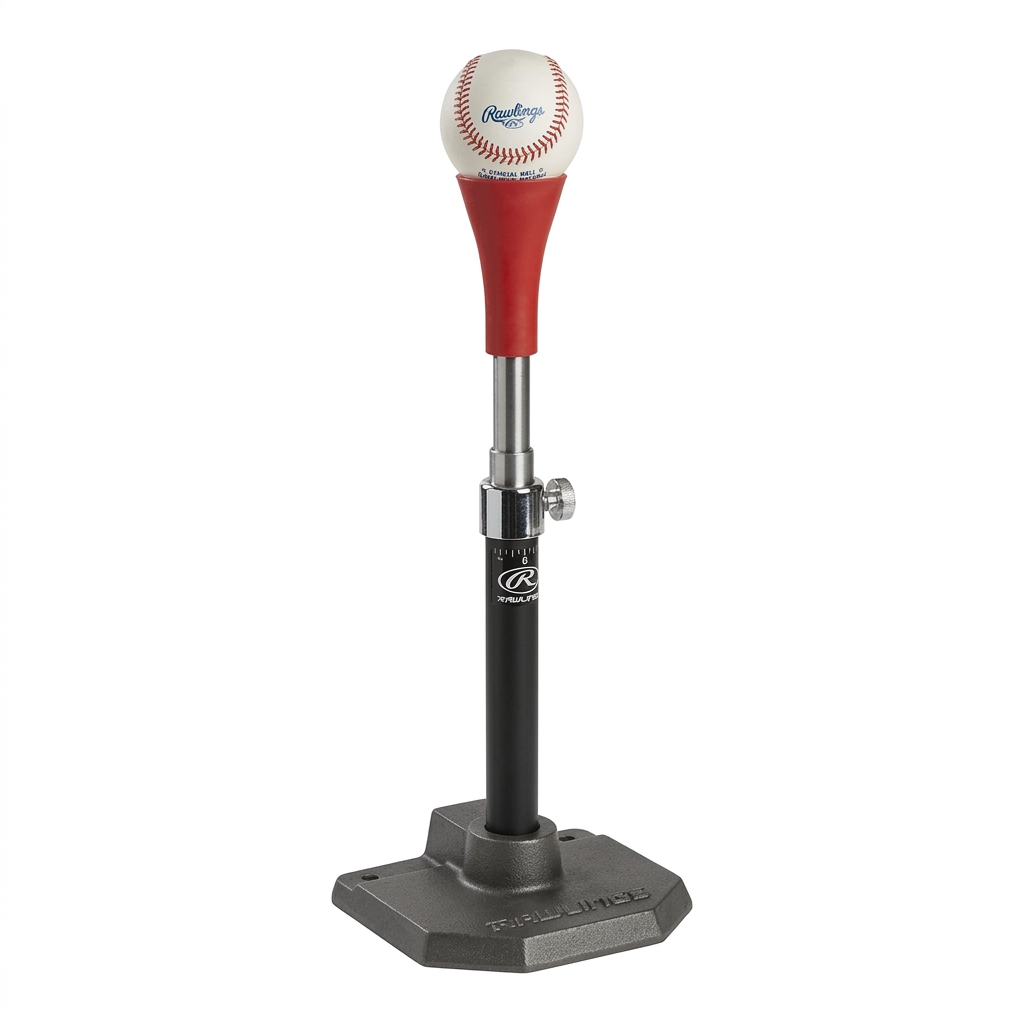
A tee is not exciting, but it is still the most important hitting tool in baseball. It lets a player work on contact point, posture, barrel path, pitch location, and repeatable mechanics without chasing bad tosses. Even major-league hitters take tee work daily.
For younger players, the tee should be stable and easy to adjust. For older hitters, it needs enough weight in the base that it does not tip after every miss. A tee plus a net gives more useful reps than most flashy training gadgets, which is why it ranks second only to the net itself.
 Best Tee
 Tanner Tee
Tanner Tee The Original
Stable tee work for repeatable youth hitting reps
Best for: all ages, especially players who need more contact consistency.
Skip it if: you want moving-ball reps — pair the tee with a machine instead of expecting the tee to replace live pitching.
Best Pitching Machine for Beginners: SKLZ Lightning Bolt
The SKLZ Lightning Bolt is a practical youth option because it uses lightweight balls, is simple to operate, and gives younger hitters moving-ball timing without the intensity of a full baseball pitching machine. SKLZ lists the Lightning Bolt Pro as automatically pitching 26 soft practice balls at 30 mph every 5 seconds, with adjustable positioning for different pitch locations.
This is not the right tool for advanced hitters trying to simulate game velocity. It is best for players learning to track the ball, load on time, and make consistent contact. For ages 6–10, that is exactly the point. For older players who need realistic baseball velocity or curveball simulation, see our guide to the best pitching machines for youth baseball.
 Best for Beginners
 SKLZ
SKLZ Lightning Bolt Pitching Machine
Simple moving-ball reps for younger hitters
Best for: ages 6–10 learning timing and confidence against moving balls.
Skip it if: your player already needs regulation baseball speed and realistic pitch movement.
Safety note: A youth batting helmet that meets NOCSAE standards is mandatory for all hitters using the SKLZ Lightning Bolt. Even though the micro-balls are lightweight, direct impact to the eye or mouth at 30 mph can cause dental or ocular injury. Always place the machine on a level surface and establish a clear no-go zone in front of it.
Best Smart Upgrade: Swing Analyzers
Once a hitter has stable, coach-approved mechanics — usually around age 11 and up — a bat sensor becomes the highest-upgrade training tool you can add. A swing analyzer clips to the knob of the bat and records bat speed, attack angle, time-to-contact, and rotational metrics, giving a player objective feedback that is hard to get from video alone.
The category leader is the Blast Motion Baseball swing sensor, which is widely used by travel programs and college programs and stores swing data to a phone app for trend tracking over time. It is the smart upgrade we recommend for motivated players who already work with a coach or parent, because the data is only useful if someone can interpret it and turn it into drill corrections.
We do not list a BuyBox with a fixed price or rating here, because sensor pricing, bundles, and compatibility change frequently and we will not publish stats we cannot stand behind. For a full comparison of bat sensors — including Blast Motion alongside alternatives — see our dedicated baseball swing analyzers guide, and confirm current pricing and device compatibility at the Blast Motion product page.
Best for: motivated hitters ages 11 and up with established mechanics and access to a coach.
Skip it if: your player is still learning basic contact. Younger hitters get far more value from a tee, a net, and simple contact drills before adding bat-speed data.
Best Budget Add-On: Reaction Ball
A reaction ball is the cheapest fielding upgrade on this list and one of the best values in all of baseball training equipment. Its uneven surface makes every bounce unpredictable, which trains the glove hand, footwork, and first-step reactions that infielders need on bad hops. SKLZ makes a popular six-sided version, but the tool is generic — any firm, irregularly bouncing ball works.
Toss it against a wall in a clear area or drop it for short-hop grounders. Five to ten minutes a few times a week builds the reflex layer that nets and tees cannot touch, and it costs a fraction of a rebounder net. Keep reaction-ball work in an open space away from faces and bystanders, because the erratic bounces go in unexpected directions.
Best for: infielders of any age who need quicker hands and better bad-hop reads.
Baseball Training Equipment FAQ
What baseball training equipment should a youth player buy first?
Most youth players should start with a sturdy 7x7 practice net and a quality batting tee. That combination creates the most useful solo hitting reps, works across age groups, and stays valuable even after adding sensors or pitching machines. Add a bucket of limited-flight balls next, then a reaction ball for fielding, before considering a machine or swing analyzer.
Is a pitching machine worth it for youth baseball?
A pitching machine is worth it once a player has basic swing mechanics and wants moving-ball reps at home without a live pitcher. For younger players, use a soft-ball youth machine like the SKLZ Lightning Bolt. For older players, the machine should match the speed, ball type, and safety space you have available — and it should always be paired with a helmet and clear space.
Are swing analyzers useful for kids?
Swing analyzers are useful for motivated players ages 11 and up who already work with a coach or parent. The bat-speed and attack-angle data is only helpful when someone can interpret it and turn it into specific drill corrections. Younger players usually get more value from a tee, a net, and simple contact drills before adding sensor metrics.
How much space do I need for a home hitting setup?
Plan for the net itself plus at least 8–10 feet of clearance behind it so the sock net can absorb hard hits safely, and enough width that a swung bat cannot reach windows, walls, or people. Indoors and in garages, use limited-flight or foam balls instead of regulation baseballs to control rebounds.
What is the difference between limited-flight and regulation baseballs for practice?
Limited-flight and foam balls travel a shorter distance and rebound with less force, which makes them safer for garages, basements, and small backyards. Regulation baseballs fly farther and bounce harder, so they belong in open outdoor space or a cage. Matching the ball to the space is one of the simplest safety upgrades you can make.
The Bottom Line
You do not need a batting cage or a wall of gadgets to build a productive home practice station. A 7x7 practice net, a quality batting tee, and a bucket of the right balls cover the large majority of youth hitting and throwing development. Add a beginner pitching machine for moving-ball timing, a reaction ball for fielding, and a swing analyzer only once mechanics are set and a player is ready for data. Buy equipment that creates reps first, protect the practice space with helmets and the right balls, and follow MLB Pitch Smart guidance on throwing volume. That is the shortest path from the garage to better game-day at-bats.
How we evaluate: We combine manufacturer documentation, independent user feedback, and parent-focused criteria like safety, durability, ease of use, and long-term value.
Accuracy note: Pricing and product availability can change. Verify details on the retailer site before purchase.
Affiliate Disclosure: Sports Gadget Review is a participant in the Amazon Services LLC Associates Program. When you purchase through links on this page, we may earn a commission at no extra cost to you. Editorial recommendations are made independently.