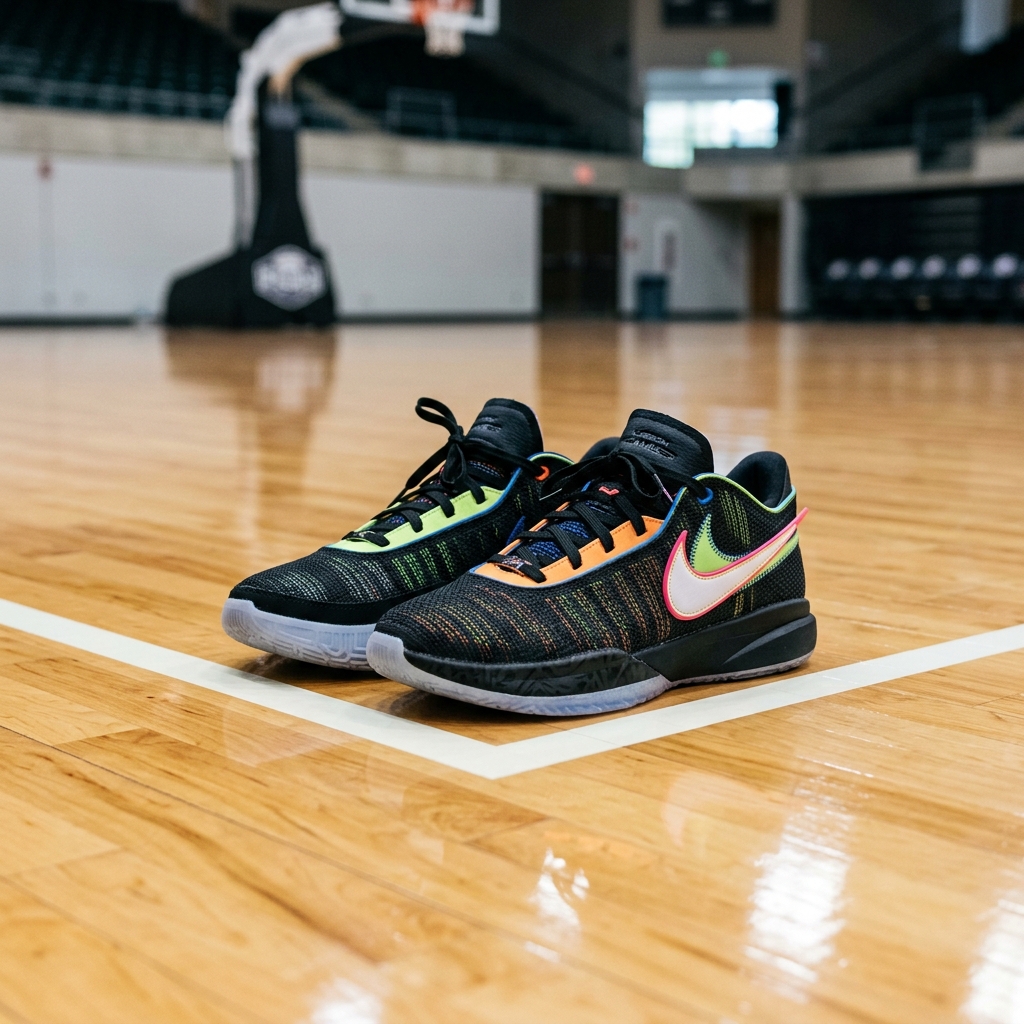
Basketball shoes have more tech crammed into them than ever — React foam, Carbon Fiber plates, 3D-printed heel counters, AI-designed traction patterns — but none of that matters if the shoe doesn’t match your position and play style. A point guard who buys a center’s shoe gets a heavy, stiff platform that kills first-step quickness. A power forward in a guard’s lightweight low-top risks rolled ankles on every box-out.
We tested seven pairs across three months of pickup games, organized runs, and outdoor court sessions. Every shoe was worn for a minimum of 15 hours of actual play before we formed opinions. Here’s what performed and what fell short.
What Actually Matters in a Basketball Shoe
Traction
The outsole pattern determines how well you stick to the court surface. Herringbone patterns remain the gold standard for multi-directional grip. Circular or blade patterns look aggressive but often lose bite on dusty courts. If you play on older gym floors that don’t get mopped between runs, traction becomes the single most important spec.
Cushioning System
Cushioning breaks into two camps: responsive (Nike Zoom Air, Adidas Boost) and plush (Nike Air Max, React). Guards generally prefer responsive setups that return energy on cuts and sprints. Forwards and centers benefit from plush cushioning that absorbs impact from rebounding and post play. Getting this wrong leads to either dead legs by the third game or foot fatigue from insufficient padding.
Ankle Support vs. Mobility
High-tops restrict ankle movement but provide lateral stability. Low-tops maximize mobility at the cost of protection. Mid-tops split the difference. Your injury history should drive this decision more than any marketing copy. If you’ve rolled an ankle in the past 12 months, stick with a mid or high-top. If your ankles are healthy and you rely on speed, a low-top won’t hurt you.
Pair the right shoes with the right basketball training equipment and you’ve got the foundation for serious improvement.
Head-to-Head Comparison
| Shoe | Price | Weight (oz) | Best For | Cushion | Traction | Ankle Support |
|---|---|---|---|---|---|---|
| Nike KD 17 | $160 | 12.4 | Guards | Responsive | Excellent | Mid |
| Nike LeBron 22 | $200 | 16.2 | Forwards/Centers | Plush Max | Very Good | High |
| Adidas Harden Vol. 8 | $160 | 13.8 | Ankle Support | Balanced | Excellent | High |
| New Balance TWO WXY v5 | $130 | 13.0 | Value | Responsive | Good | Mid |
| Nike Zoom GT Cut 3 | $190 | 11.8 | Speed Guards | Very Responsive | Good | Low |
| Adidas AE 1 Low | $120 | 12.6 | Outdoor Play | Firm | Excellent | Low |
| Puma MB.04 | $115 | 12.2 | Budget | Moderate | Good | Mid |
Our Top Picks
Best for Guards: Nike KD 17
Kevin Durant’s 17th signature shoe nails the balance guards need — light enough for full-court sprints, supportive enough for hard crossovers. The Zoom Strobel unit (a full-length Zoom Air bag stitched directly to the upper) creates a low-to-the-ground, responsive ride that makes you feel every cut and pivot.
At 12.4 ounces, the KD 17 is lighter than most mid-tops without sacrificing lateral containment. The Flyknit upper wraps your foot securely through hard lateral movements, and the external heel counter locks your foot in place on sudden stops. The herringbone traction pattern bites hard on clean indoor courts and holds up acceptably on outdoor surfaces.
Where the KD 17 falls short is impact protection during landing. Guards who drive and finish at the rim frequently will feel the court through the forefoot after 90+ minutes. This is a trade-off of the responsive cushioning — you gain court feel but sacrifice padding.
Pros:
- 12.4 oz — light enough for full-speed guard play
- Zoom Strobel creates excellent court feel and responsiveness
- Herringbone traction grips consistently on indoor courts
- Flyknit upper conforms to foot shape without break-in
Cons:
- Forefoot cushioning thins out over extended sessions
- $160 price is steep for a shoe that wears down in 4-6 months of regular play
- Narrow fit — wide-footed players need to go up half a size
- Outdoor use accelerates outsole wear significantly
Best for: Perimeter guards who prioritize speed, court feel, and quick directional changes
 Top Pick
 Nike
Nike KD 17
Best court feel and responsiveness for guard play
Best Cushioning: Nike LeBron 22
The LeBron line has always prioritized impact protection, and the 22 doubles down with a Zoom Air unit in the forefoot stacked on top of a full-length Air Max cushioning unit. The result is a shoe that absorbs hard landings like nothing else in this test. Drop-step drives, contested rebounds, box-outs — your knees and feet feel protected through all of it.
The trade-off is weight. At 16.2 ounces, this is the heaviest shoe we tested. Guards will feel sluggish in the LeBron 22. But for forwards and centers who spend more time in the paint than in transition, the weight barely registers — you’re not sprinting coast-to-coast, you’re battling for position and absorbing contact.
The high-top collar provides excellent ankle support, and the Battleknit 2.0 upper contains your foot well during lateral slides. Traction is very good on indoor courts, though the outsole pattern picks up dust faster than the KD 17’s herringbone.
After intense sessions, pair these with proper recovery tools to keep your legs fresh.
Pros:
- Best impact protection in our test — Zoom Air + Air Max dual-unit system
- High-top collar with excellent ankle containment
- Premium materials that feel durable and well-constructed
- Wide foot-friendly fit out of the box
Cons:
- 16.2 oz — too heavy for perimeter play
- $200 price makes this the most expensive shoe tested
- Outsole collects dust quickly on unswept courts
- Stiff out of the box — needs 3-4 sessions to break in
Best for: Power forwards and centers who play primarily in the post and need maximum impact protection
 Best Cushioning
 Nike
Nike LeBron 22
Dual Air cushioning absorbs the hardest landings
Best Ankle Support: Adidas Harden Vol. 8
James Harden’s signature line has evolved from a guard-focused shoe into something more versatile. The Vol. 8 uses a full-length Boost midsole with a TPU midfoot cage that wraps from the arch to the ankle, creating one of the most stable platforms in basketball. If you’ve dealt with ankle sprains or chronic instability, this shoe provides structural support without the heavy, boot-like feel of traditional high-tops.
The Bounce Pro cushioning in the forefoot keeps the shoe responsive for guards, while the Boost midsole in the heel handles impact absorption for bigger players. This dual-cushioning setup means the Harden Vol. 8 actually works across positions — a rarity in signature basketball shoes.
Traction is excellent. The full-coverage herringbone pattern grips on both indoor and outdoor surfaces without wearing down prematurely. We ran the Harden Vol. 8 on outdoor courts for six sessions with minimal outsole degradation.
Pros:
- TPU midfoot cage provides best-in-test lateral stability
- Dual-cushioning system works for guards and bigs
- Herringbone traction performs well indoors and outdoors
- True-to-size fit with comfortable padding around the collar
Cons:
- 13.8 oz is mid-range — not the lightest option for speed-first guards
- Boost midsole breaks down faster than Zoom Air under heavy use
- Limited colorway availability
- Upper material shows creasing after 20+ hours of play
Best for: Players with ankle injury history who need structural support without sacrificing mobility
 Best Ankle Support
 Adidas
Adidas Harden Vol. 8
TPU cage delivers best lateral ankle support without bulk
Best Value: New Balance TWO WXY v5
New Balance continues to prove that basketball shoes don’t need a $200 price tag or a signature athlete to perform well. The TWO WXY v5 at $130 delivers responsive FuelCell cushioning, a durable rubber outsole with solid herringbone traction, and a knit upper that breathes better than most shoes at this price.
The FuelCell midsole provides a snappy, responsive feel that’s closer to the KD 17 than the LeBron 22 — you get energy return on cuts without feeling disconnected from the court. At 13 ounces, it’s light enough for guard play and stable enough for wing players who rebound and defend in the post occasionally.
Build quality punches above the price point. After 25+ hours of play, the upper showed minimal wear and the outsole retained its traction pattern. This is a shoe that lasts a full season without needing replacement, which can’t be said for every $160+ option.
If you’re pairing new shoes with drills, check out our shot-tracking tech guide to measure how your footwork improvements translate to on-court results.
Pros:
- $130 — best performance-per-dollar in our test
- FuelCell cushioning is responsive and comfortable
- Durable construction that holds up over a full season
- Breathable knit upper prevents overheating
Cons:
- Less premium feel than Nike or Adidas signature lines
- Ankle support is adequate, not exceptional
- Limited retail availability — often online-only
- Color options are more conservative than competitors
Best for: Players who want high-level performance without paying signature shoe prices
 Best Value
 New Balance
New Balance TWO WXY v5
FuelCell cushioning and season-long durability at $130
Best for Quick Guards: Nike Zoom GT Cut 3
The GT Cut 3 is built for one thing: explosive first-step quickness. The full-length Zoom Air Strobel sits on top of a React foam midsole, creating the most responsive cushioning stack Nike offers in basketball. At 11.8 ounces, it’s the lightest shoe in our test.
The low-top design maximizes ankle mobility for crossovers and behind-the-back dribbles. The downside is obvious — zero structural ankle support. You’re trading protection for freedom of movement, which works if your ankles are healthy and you have strong lower leg muscles. Train those ankles with resistance band work to build the stability the shoe doesn’t provide.
Traction is good on clean courts but inconsistent on dusty surfaces. The blade-pattern outsole loses grip when the floor isn’t maintained, which makes this a poor choice for older gyms or outdoor play.
Pros:
- 11.8 oz — lightest shoe tested
- Most responsive cushioning setup in our test
- Low profile maximizes ankle mobility for quick guards
- Excellent forefoot flex for explosive push-offs
Cons:
- No ankle support — high injury risk for players with weak ankles
- $190 premium price for a shoe that wears out fast
- Traction struggles on dusty courts
- Narrow fit throughout
Best for: Primary ball handlers who need maximum speed and court feel
Shop Nike Zoom GT Cut 3 on Amazon
Best Outdoor: Adidas AE 1 Low
Anthony Edwards’ signature shoe earns the outdoor crown through sheer durability. The thick rubber outsole with deep-cut herringbone grooves resists the abrasion that destroys most indoor basketball shoes within weeks of outdoor play. After 10+ hours on asphalt, the AE 1 Low’s outsole showed less wear than any other shoe we tested.
The Lightstrike cushioning is firm compared to Boost or Zoom Air, which actually works well on hard outdoor surfaces — softer cushioning bottoms out faster on concrete and asphalt. The firm platform keeps your foot stable on uneven outdoor court surfaces that would expose flaws in plusher shoes.
At $120, it’s the second-cheapest shoe in our test and arguably the best value for players who primarily play outdoors. The low-top design keeps weight down (12.6 oz) while the reinforced toe cap handles the rough surfaces that shred lighter materials.
Pros:
- Most durable outsole — built specifically for outdoor play
- $120 price undercuts most competitors significantly
- Lightstrike cushioning handles hard outdoor surfaces well
- Reinforced toe cap prevents blowouts on rough courts
Cons:
- Firm cushioning feels harsh on indoor hardwood
- Low-top offers minimal ankle support
- Upper ventilation is limited — feet get hot in summer outdoor sessions
- Aesthetic design is polarizing
Best for: Outdoor-primary players who need a durable shoe that won’t fall apart on asphalt
Shop Adidas AE 1 Low on Amazon
Best Budget: Puma MB.04
LaMelo Ball’s fourth signature shoe delivers a surprisingly complete package at $115. The NITRO foam midsole provides cushioning that competes with shoes $50 more expensive — it’s responsive under the forefoot and adequately plush in the heel. The traction pattern is a modified herringbone that grips well on clean indoor courts.
At 12.2 ounces, the MB.04 is light enough for guard play. The mid-top collar provides basic ankle support without restricting movement. The mesh upper is breathable but shows wear faster than knit or synthetic leather alternatives — expect visible creasing after 15-20 hours of play.
The MB.04 won’t outperform the KD 17 or Harden Vol. 8, but it delivers 75-80% of their on-court experience at 70% of the price. For high school players, recreational ballers, or anyone who plays 2-3 times per week and doesn’t want to invest heavily in footwear, this is the right call.
Practice your shooting with a quality adjustable hoop and these affordable shoes, and your game will improve faster than buying premium gear and sitting on the couch.
Pros:
- $115 — lowest price in our test with genuine performance
- NITRO foam competes with higher-priced cushioning systems
- Lightweight at 12.2 oz for a mid-top
- Comfortable out of the box — no break-in period needed
Cons:
- Upper material shows wear faster than premium shoes
- Traction underperforms on dusty or outdoor courts
- Less lateral stability than shoes with external cages
- Cushioning flattens after 50+ hours of heavy use
Best for: Budget-conscious players and recreational ballers who play 2-3 times weekly
Frequently Asked Questions
How often should you replace basketball shoes?
Performance basketball shoes lose significant traction and cushioning after 45-75 hours of active play. For someone playing three times a week at 90 minutes per session, that’s roughly 3-5 months. The outsole traction wears first — if you’re slipping on cuts you used to make cleanly, the shoe is done regardless of how the upper looks. Budget for two pairs per year if you play seriously.
Do basketball shoes actually prevent ankle injuries?
High-top shoes reduce the range of ankle inversion (the motion that causes most sprains) but don’t eliminate injury risk. A 2019 study in the British Journal of Sports Medicine found that high-tops reduced ankle sprain incidence by about 25% compared to low-tops. The bigger factor is ankle strength and proprioception — players with strong stabilizing muscles get injured less regardless of shoe height. Use high-tops as one layer of protection, not the only one.
Are expensive basketball shoes worth the price over budget options?
The price difference between a $115 shoe and a $200 shoe buys you two things: better materials that last longer and more refined cushioning technology. A $200 shoe typically maintains its performance for 60-75 hours of play, while a $115 shoe starts declining at 40-50 hours. If you play frequently, the cost-per-hour actually favors premium shoes. If you play casually (once or twice a week), budget shoes deliver excellent value.
Can you use running shoes for basketball?
No. Running shoes are designed for linear forward motion and provide almost zero lateral stability. Basketball involves constant lateral cutting, pivoting, and sudden directional changes that running shoes can’t support. Wearing running shoes on a basketball court significantly increases your risk of ankle sprains and knee injuries. Even a $60 basketball shoe from a sporting goods store is safer than a $200 running shoe.
What’s the difference between indoor and outdoor basketball shoes?
The primary difference is outsole rubber compound and thickness. Outdoor shoes use harder, thicker rubber that resists abrasion from concrete and asphalt. Indoor shoes use softer rubber that grips polished hardwood better but wears down rapidly outdoors. Using an indoor shoe outdoors will destroy the outsole in 10-15 sessions. Using an outdoor shoe indoors works fine but sacrifices some grip on clean hardwood. If you split time between surfaces, buy an outdoor-rated shoe — it works adequately indoors but survives outdoors.
How we evaluate: We combine hands-on use (when available), manufacturer documentation, independent user feedback, and parent-focused criteria like safety, durability, ease of use, and long-term value.
Accuracy note: Pricing and product availability can change. Verify details on the retailer site before purchase.
Affiliate Disclosure: Sports Gadget Review is a participant in the Amazon Services LLC Associates Program. When you purchase through links on this page, we may earn a commission at no extra cost to you. Editorial recommendations are made independently.