Speed and change of direction are the skills that separate a young athlete who can keep up from one who can break a play open. The right speed and agility training equipment for youth will not replace coaching, sport practice, or plain repetition, but it does make short, focused sessions more structured, repeatable, and fun — which is exactly what keeps kids coming back.
This guide is written for parents and coaches buying gear for soccer, football, basketball, baseball, volleyball, lacrosse, track, and general athletic development. The goal is to help you spend on the few tools that actually move the needle for youth athletes — ladders, cones, mini hurdles, reaction balls, and resistance — and skip the gadgets that look impressive but add little for kids who are still learning to move well.
How we approached this: we did not run lab tests and are not claiming hands-on time with every product. Instead, these picks are grounded in widely published strength-and-conditioning principles for young athletes — age-appropriate progressions, low load, and clean movement first — plus what families consistently report works at home and on the practice field. Where the science matters, we cite it directly below.
Quick Picks
| Need | Best equipment | Why it works |
|---|---|---|
| First agility kit | Disc cones plus a reaction ball | Covers change-of-direction, reaction, and coordination in one cheap bundle |
| Footwork sessions | Agility ladder | Repeatable patterns for rhythm, posture, and precise foot placement |
| Acceleration work | Mini hurdles | Encourages knee drive and quick ground contacts when height stays low |
| Small-space training | Reaction ball | Works against a wall, on a court, or with a partner |
| Older, stronger athletes | Bands or light sled work | Adds load only after sprint and shuffle mechanics are consistent |
What Actually Builds Speed and Agility in Youth
Before buying anything, it helps to know what you are training. “Agility” is really two skills stacked together: the physical ability to accelerate, decelerate, and change direction, and the cognitive ability to read a cue and decide which direction to move. Good equipment targets one or both.
For kids, the cognitive side — reacting to a color, a number, or a ball — is often the bigger lever. Pre-planned drills where the athlete already knows the pattern build rhythm and coordination; reactive drills where the athlete has to respond build the decision speed that actually shows up in a game. A balanced kit gives you both.
The strength-and-conditioning consensus for young athletes is straightforward: keep volume low, keep technique clean, progress load slowly, and develop a broad movement base before specializing. The CDC’s physical activity guidelines recommend that children and adolescents get daily activity with aerobic, muscle-strengthening, and bone-strengthening work across the week, and the NSCA’s guidance on integrative neuromuscular training for youth emphasizes age-appropriate progressions, safe technique, and multilateral development over early specialization.
How We Compare Equipment
When you are choosing between ladders, cones, or hurdles, the same five questions matter regardless of the tool:
- Age fit. Can the spacing, height, or load be adjusted down for a 9-year-old and up for a 16-year-old?
- Surface. Will it slide on hardwood, stay put on grass, and survive being left in a garage?
- Setup time. Can a kid set it up and pack it away without an adult spending ten minutes?
- Realistic volume. Does it support short, high-quality reps, or does it push the athlete toward long, sloppy sets?
- Carryover. Does the drill transfer to the sport, or is it just a party trick?
Cheap, simple tools usually win on most of these. The expensive gear earns its place only when an athlete has outgrown the basics.
Agility Ladders
The agility ladder is the most recognizable footwork tool because it gives athletes a visual target for precise steps. Use it for rhythm, coordination, posture, and warmup patterns before sport-specific work.
GHB Pro Agility Ladder
The GHB Pro is a 20-foot, 12-rung ladder with adjustable spacing and a carrying bag. It is the best fit for most families and teams because it stores easily, works on grass or gym floors, and lets you widen the spacing for younger athletes or narrow it for faster footwork.

GHB
GHB Pro Agility Ladder
20ft, 12-rung ladder with adjustable spacing and carry bag
For most athletes, the useful difference between ladders is layout stability and rung spacing. More expensive ladders can feel a little sturdier, but the training value comes from consistent foot placement, clean posture, and short sets with full attention. If you want a second option, Yes4All and SKLZ both make comparable 12-rung ladders in the same price range, so pick whichever is discounted.
How to Use an Agility Ladder
Start with four patterns: one foot per box, two feet per box, lateral shuffles, and icky shuffle. Master these at controlled speed before adding complex patterns. Rushing through sloppy reps builds sloppy movement habits.
For youth athletes, keep ladder work short and focused. Five to ten minutes is enough for younger athletes; older athletes can use ladder patterns as a warmup before sprint, cone, or reaction work.
For full drill progressions, use our agility ladder drills and speed training guide.
Common Ladder Mistakes
The biggest mistake is treating ladder drills like a race. Good reps include active arms, tall posture, quick contacts, and eyes forward as soon as the pattern is learned. If an athlete starts stomping, crossing feet awkwardly, or losing body position, stop the set and simplify the drill.
Cones and Markers
A set of flat disc cones is the most versatile agility training tool you can own. Cones work for every sport, every age group, and nearly every surface. A 50-cone set from SKLZ, Champion Sports, or Kwik Goal in the $15–25 range covers almost any family or team for years.
Best Uses
Use cones to set up T-drills, 5-10-5 shuttles, defensive slides, soccer dribbling courses, baseball baserunning angles, football route landmarks, and volleyball approach spacing. The same set can mark start lines, stop lines, cut points, and reaction targets.
For reactive work without electronics, place numbered or colored cones in a semicircle. Call a number or color at random and have the athlete sprint, shuffle, or backpedal to that marker. This is the single best free “upgrade” to any cone set.
Smart Cone Upgrade
Light-up cones and app-based reaction tools can be useful when athletes need more random decision-making and you want timing data. They are not required for a good agility session, but they can add motivation for tech-minded kids. See our smart agility cones guide before spending on connected systems.
Speed Hurdles and Mini Hurdles
Mini hurdles help athletes practice quick ground contacts, rhythm, and knee drive. The goal is not to jump high. The goal is to run smoothly over low obstacles without breaking sprint posture. A basic set of six 6-inch PVC or plastic hurdles in the $20–30 range is enough for most families.
For Youth Athletes
Start with low hurdles and generous spacing. If an athlete is clearing the hurdle by several inches, they are probably jumping instead of running through the drill. Lower the hurdle, increase spacing, or simplify the pattern until contacts are quick and controlled.
Fixed 6-inch hurdles are enough for most youth work. Adjustable hurdles make sense for older athletes because they can progress from low rhythm drills to more demanding sprint mechanics without buying a second set.
When to Add Hurdles
Do not introduce hurdles until the athlete can run, shuffle, and decelerate with reasonable control. Adding obstacles to poor movement patterns usually adds confusion instead of speed. Pair hurdle work with cone drills so athletes learn both linear rhythm and real change of direction.
Resistance Training Tools
Resistance tools belong later in the progression. Use them after the athlete already understands basic acceleration, deceleration, and lateral movement — typically around age 13 and up, and only with clean technique.
Speed Parachutes
A sprint parachute adds drag during acceleration and can make short sprint starts more demanding. It works best in open space on calm days. Crosswind can pull the athlete sideways, which turns a speed drill into a balance problem, so save parachutes for older youth athletes who can stay tall under pull.
Resistance Bands and Sleds
Bands attached to a belt give consistent resistance without wind dependence. They can support resisted sprints, shuffles, backpedals, and partner drills. Speed sleds work the same principle with external load, but loading should stay light when the goal is speed rather than strength.
For more setup options, compare our resistance bands for athletic training.
Reaction Training
Reaction tools help athletes connect vision, decision-making, and movement. They are especially useful for court and field sports where the athlete has to respond to a ball, opponent, coach, or teammate.
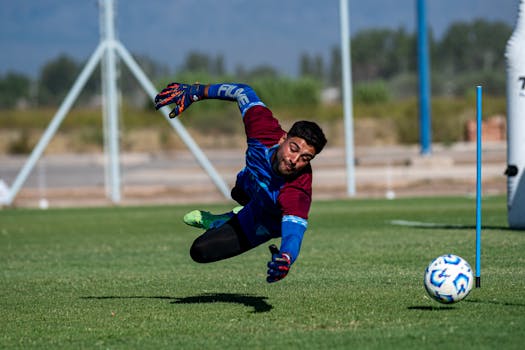
SKLZ Reaction Ball
This six-sided ball bounces unpredictably, forcing athletes to react and move explosively. Throw it against a wall and field it as it bounces randomly, or use partner tosses for short reaction drills.
SKLZ
SKLZ Reaction Ball
Unpredictable bounce for reaction time and hand-eye coordination drills
The randomness is the point. Predictable drills build rhythm; reaction drills train athletes to read and respond.
Light Reaction Systems
Products like light-up pods can be effective for timed reaction work, but they are hard to justify as a first purchase. A cheaper alternative is to tape numbers to cones, call out targets randomly, and have the athlete sprint or shuffle to touch the correct cone.
Equipment Picks by Age Group
What a 9-year-old needs is different from what a high school athlete needs. Here is how to match gear to the athlete in front of you.
| Age | Start here | Add when ready | Skip for now |
|---|---|---|---|
| 7–9 | Disc cones, reaction ball | Simple ladder patterns (wide spacing) | Hurdles, resistance, parachutes |
| 10–12 | Cones, ladder, reaction ball | 6-inch mini hurdles | Heavy resistance, loaded sleds |
| 13–15 | Full core kit | Light bands, parachute on calm days | Heavy sled loads |
| 16+ | Full core kit plus hurdles | Bands, sled, parachute | — |
Younger athletes get more from variety and play than from load. Older athletes can layer in resistance once their mechanics are consistent, but the cue stays the same: keep quality high and volume moderate.
Building a Complete Agility Kit
| Tier | Equipment | Best for |
|---|---|---|
| Starter | Disc cones plus reaction ball | Athletes who need simple change-of-direction and reaction work |
| Core | Starter kit plus agility ladder | Families and teams building regular footwork sessions |
| Expanded | Core kit plus mini hurdles and resistance bands | Older athletes ready for sprint mechanics and resisted movement |
| Tech | Expanded kit plus light reaction system | Teams that want timed, randomized reaction drills |
Most families get excellent training value from the core tier: cones, a ladder, and a reaction ball. Add hurdles or resistance only after the athlete trains consistently.
Training Frequency and Programming
Agility training works best in short, high-quality sessions placed near the start of a workout, after a warmup and before conditioning. The CDC recommends that children and adolescents get daily physical activity with aerobic, muscle-strengthening, and bone-strengthening work across the week, and NSCA youth training guidance emphasizes age-appropriate progressions, safe technique, and multilateral development.
| Age | Frequency | Session length | Focus |
|---|---|---|---|
| 7–9 | 2x/week | 10–15 min | Games, movement variety, simple cone patterns |
| 10–12 | 2–3x/week | 15–20 min | Ladder patterns, cone drills, reaction ball work |
| 13–15 | 2–4x/week | 20–25 min | Sport-specific changes of direction and light resistance |
| 16+ | 3–5x/week | 20–30 min | Speed-power combinations, deceleration, advanced reaction |
The most important rule: avoid high-speed agility work when fatigued. Sloppy reps reinforce sloppy movement patterns.
Frequently Asked Questions
At what age should kids start agility training?
Movement-based agility — cone games, hopping, skipping, and simple ladder patterns — is appropriate as soon as a child is playing organized sports, often around age 7 or 8. The key is to keep it play-based and short. Formal, high-volume speed work and loaded resistance belong in the early teen years at the earliest, once basic movement mechanics are solid.
Does agility equipment actually make kids faster?
Equipment gives you structure and repeatability; it does not create speed on its own. Consistent short sessions of clean footwork, change-of-direction, and reaction drills — paired with general athletic development and adequate sleep and recovery — are what improve on-field speed and agility over a season. No single tool is a shortcut.
How much should I spend on a first kit?
Less than most people think. A disc cone set, a reaction ball, and an agility ladder can be put together for roughly $40–50 and will cover most youth athletes for years. Add mini hurdles or resistance only when the athlete outgrows the basics.
Are simple cones and ladders better than electronic reaction systems?
For most families, yes. Basic cones and ladders develop the same movement skills at a fraction of the cost, and a coach or parent calling random cues supplies the reactive element for free. Electronic systems are worth the money mainly for teams that want repeatable timing data across many athletes.
Is resistance training safe for youth athletes?
When it is age-appropriate, supervised, and focused on technique rather than heavy load, yes. The NSCA’s integrative neuromuscular training guidance supports supervised, technique-driven resistance and movement work for youth; the risk comes from poor supervision, bad form, and excessive load, not from the equipment itself.
Our Top Pick
Start with disc cones and a reaction ball. That combination handles direction changes, reaction work, warmups, and small-space training for almost every sport.
Add an agility ladder when the athlete wants structured footwork sessions. Add mini hurdles and resistance tools only after basic movement quality is consistent.
For sport-specific setups, see our football training gear and soccer training equipment for youth guides.
Sources
- CDC physical activity guidelines for children and adolescents
- NSCA integrative neuromuscular training for youth athletes
Related Articles
How we evaluate: We combine manufacturer documentation, independent user feedback, and parent-focused criteria like safety, durability, ease of use, and long-term value.
Accuracy note: Pricing and product availability can change. Verify details on the retailer site before purchase.
Affiliate Disclosure: Sports Gadget Review is a participant in the Amazon Services LLC Associates Program. When you purchase through links on this page, we may earn a commission at no extra cost to you. Editorial recommendations are made independently.